
Structuring wood
Controlled wood structuring for the targeted highlighting of natural grains, production of uniform surface structures and creation of reproducible depth effects for decorative industrial visible surfaces.
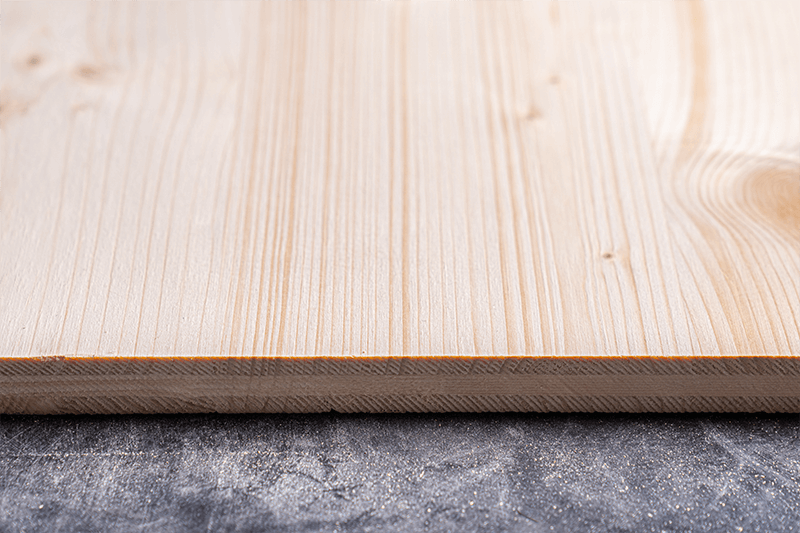
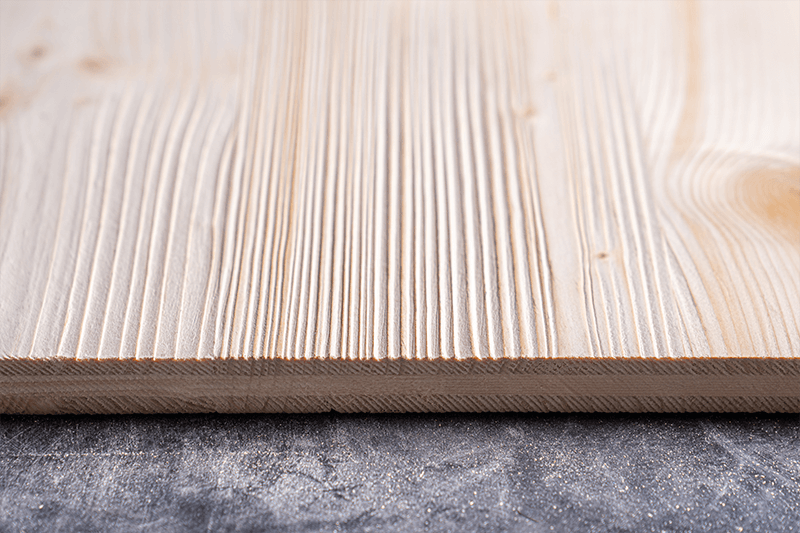
Structured wood surfaces with visible grain and uniform depth effect
Structuring wood is a processing step within industrial woodworking used to selectively highlight natural grain patterns and uniform surface textures. Softer wood components are removed in a controlled manner to create a controlled depth effect and decorative surface patterns.
The quality of the texturing directly influences the surface appearance, feel, and uniformity of decorative wood surfaces. Different wood species, varying material densities, and changing grain directions place high demands on tool selection and processing parameters.
The aim of texturing wood is to achieve a defined surface finish with a uniform texture and controlled depth. Textured wood surfaces create a high-quality and distinctive surface effect and are used particularly for decorative, visible surfaces.
Why wood is textured
Wood exhibits natural differences in material density and fiber structure. Particularly between earlywood and latewood, there are variations in resistance to mechanical processing.
Softer earlywood areas are more easily worn away than harder annual rings. Without controlled texturing, this often results in uniform surface patterns with little depth and a poorly defined grain structure.
Structuring involves selectively brushing out softer wood components while leaving harder growth rings intact. This creates a clearly visible and tactile wood structure with a controlled depth effect.
Especially on decorative visible surfaces, texturing enhances a natural and characteristic surface appearance. At the same time, it creates uniform wood structures with a controlled surface effect.
Structural effect through controlled material removal
The structural effect is created by the controlled removal of softer wood components along the surface. Earlywood areas are particularly sensitive to mechanical processing than harder annual rings.
During the structuring process, softer wood components are selectively brushed out, while harder structures are retained. This creates a tangible and visible relief structure along the wood surface.
The intensity of the structure depends, among other things, on the type of wood, the grain direction, the tooling, and the selected machining parameters. Different areas of the workpiece react differently to the tool action.
Without uniform processing, uneven structural patterns, local over-processing, or fluctuating depth effects will occur along the surface.
Controlled processing creates uniform wood structures with a defined surface effect and controlled depth effect.
Uniform wood edges achieved through controlled material removal
Edge breaking is a prerequisite for uniform and reproducible edge conditions. Even before subsequent coating or finishing work, sharp transitions, damaged fibers, and unstable edge areas must be processed in a controlled manner.
Edge breaking involves selectively smoothing sharp-edged areas of the workpiece to ensure consistent tool engagement along the entire edge. Simultaneously, loose wood fibers and minor tear-out are reduced in a controlled manner.
Without a uniform initial condition, fluctuating edge conditions arise, leading to uneven coating uptake and an unstable feel. This can result in visible edge defects and uneven transitions between surface and edge.
Reproducible processing creates stable conditions for uniform edge patterns, controlled material removal and reproducible results in industrial woodworking.
Texturing wood with spiral round brushes
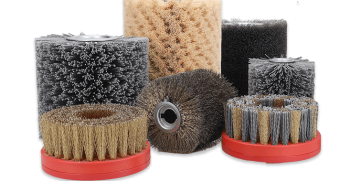
Spiral round brushes are used in the structuring process to brush out softer wood components in a controlled manner and to visibly highlight the natural wood grain.
The spiral brush arrangement creates a continuous tool engagement along the workpiece surface. This allows softer wood areas to be processed evenly and different texture intensities to be created.
The surface texture is influenced by factors such as brush type, rotational speed, feed rate, and contact pressure. Different processing parameters alter the intensity of material removal and thus the depth of the surface finish.
Depending on the desired surface effect, different finishing materials are used. This allows the texture to be adapted to the type of wood and the desired surface appearance.
The result is a uniform wood structure with visible grain and controlled relief effect.
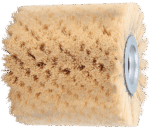
Disc brushes for uniform wood structures
Disc brushes are used to evenly process wooden surfaces and stabilize the structural effect along the surface.
The tool geometry ensures a uniform tool engagement across the entire working surface. This allows for controlled texturing of wood surfaces and even highlighting of visible grain patterns.
The intensity of the texturing depends, among other things, on the bristle material, brush density, and process parameters. Different settings affect the depth of the effect as well as the uniformity of the surface structure.
The choice of brush bristles depends on factors such as wood type, density, and desired grain intensity. For softwoods with low density, brushes with silicon carbide or brass-plated steel wire are used. Especially with finely grained softwoods, smaller wire or bristle diameters allow for more consistent processing along the wood grain.
For hardwoods with higher density, brushes with brass-plated steel wire are used to create a controlled texture in denser areas of the wood. After processing, remaining wood fibers or small wood splinters can be reduced in a controlled manner without significantly altering the resulting texture.
Controlled material removal creates uniform wood surfaces with a defined structural effect and consistent surface quality.
Influence of wood type and grain direction
The structural effect of wood surfaces is significantly influenced by material density, annual ring structure, and grain direction. Different wood species react differently to tool intervention during texturing.
Particularly soft wood components are worn away more quickly than denser areas within the wood structure. This results in different depth effects and surface appearances, depending on the type of wood.
The orientation of the wood fibers also influences the uniformity of the texture. Different fiber directions alter the material removal along the surface and thus the visible texture.
The coordination of tooling and machining parameters is therefore crucial for a uniform surface structure.
Uniform surface appearance on decorative visible surfaces
The uniformity of the wood structure directly influences the visual effect of decorative surfaces. Unevenly structured surfaces lead to irregular grain patterns and visible variations within the surface.
Controlled structuring creates uniform surface textures with visible depth and consistent feel. This provides stable conditions for high-quality decorative surfaces.
Even in automated machining processes, the uniformity of the structure influences the tool engagement as well as the stability of the machining results.
Controlled structuring processes support uniform visible surfaces in industrial woodworking.
Our customers' success
By customizing our tools for each customer, process times can be significantly reduced. A customer case shows that up to 80 % of processing time can be saved during deburring.
The latest generation of deburring discs maximizes the abrasive surface area thanks to the innovative arrangement and slotted structure of the abrasive flaps, increases material removal at the sheet metal edge and significantly improves the performance of your deburring machine.
Our customers benefit from our extensive consulting and application experience. This expertise guarantees maximum competitiveness through high-performance processes in every production environment.
Slag hammer brush in action
You are currently viewing placeholder content from YouTube. To access the actual content, click the button below. Please note that this will involve sharing data with third parties.
More informationFAQ on structuring wood in woodworking
Antworten zu Strukturierung, Werkzeugauswahl, Holzarten und Optik.
What effect does texturing have on wood surfaces?
Structuring enhances the visible grain, feel, and depth of wood surfaces. The controlled removal of softer wood components creates uniform relief structures along the surface. At the same time, natural wood structures are accentuated, and decorative surfaces are visually enhanced.
What tools are used to structure wood?
Spiral brushes and disc brushes are primarily used for texturing wood. Spiral brushes allow for continuous tool engagement along the workpiece surface and support the uniform highlighting of natural grain patterns. Disc brushes are used to uniformly texture wood surfaces and create reproducible surface effects across larger areas.
Which brushes are suitable for softwood?
For softwoods with lower density, brushes with silicon carbide or brass-plated steel wire are used. Soft earlywood areas are particularly sensitive to mechanical processing and are worn away more quickly than harder annual rings. Smaller wire or bristle diameters promote a more uniform texturing effect along the wood surface.
Which brushes are suitable for hardwood?
For hardwoods with higher density, brushes with brass-plated steel wire are particularly suitable. Denser wood areas require a stable and consistent tool engagement to reproducibly create the desired textured effect. At the same time, material removal must be controlled to avoid uneven depth of texture across the surface.
Why does the type of wood influence the structural effect?
Different wood species have different material densities, annual ring structures, and grain directions. This significantly alters the material removal behavior during texturing. Softer wood components are brushed out more quickly than denser areas, resulting in different depth effects and surface textures depending on the wood species.
What effect do spiral round brushes have?
Spiral rotary brushes support continuous tool engagement along the workpiece surface and enable the uniform highlighting of natural wood grain. The spiral brush arrangement allows for the controlled removal of softer wood components and the creation of reproducible textural effects across the surface.
What effect do disc brushes have on texturing?
Disc brushes create a uniform material removal across the workpiece surface and support stable texturing processes. This consistent processing results in reproducible wood textures and uniform surface effects along decorative visible surfaces. Simultaneously, the uniformity of the depth effect within the surface is improved.
Where is wood structuring used?
Texturing is used particularly for decorative wood surfaces and industrial visible surfaces. Typical applications include textured furniture surfaces, wall coverings, interior fittings, or exposed wooden components with a pronounced grain effect. The aim is a uniform and high-quality surface texture with a controlled depth effect.
Your contact persons

Marc Böck


Anja Berscheit